Zones, prices, rentals, taxes and the best blocks to buy property in Eixample
Key facts about Eixample for property buyers
Eixample is one of the most famous, prestigious and liquid districts of Barcelona. It is the central part of the city, known for its grid layout, wide avenues, modernist architecture, historic buildings, restaurants, boutiques, offices, healthcare, schools, transport and high demand from both local and foreign property buyers.
For foreign buyers, Eixample is interesting in several scenarios: buying an apartment for living in central Barcelona, investing in long-term or medium-term rental property, buying a penthouse, purchasing an apartment in a modernist building, buying a home for children during their studies, acquiring a property for a future move, preserving capital or buying urban property in one of the most recognisable districts in Spain.
Eixample is not an inexpensive market. It is one of the most expensive and competitive districts of Barcelona, where quality apartments with a lift, balcony, terrace, views, good building condition and the right orientation quickly find buyers. That is why, when buying, it is important to look not only at the price per square metre, but also at the street, micro-location, floor level, light, building condition, legal status, community fees and future liquidity.
Why foreigners buy property in Eixample
Eixample attracts foreign buyers through its combination of central location, architecture, liquidity and quality of urban life. This is a district where it is possible to live without a car, use the metro, walk to restaurants, shops and offices, and quickly reach the sea, airport, schools, clinics and business areas.
The main reasons for buying are the prestige of the district, central location, modernist buildings, high rental demand, Barcelona’s international recognition, limited supply of quality properties, developed infrastructure and stable interest from international buyers.
For many buyers, Eixample becomes an alternative to Sarrià-Sant Gervasi, Gràcia, Poblenou, the Gothic Quarter, El Born or Diagonal Mar. Unlike the old town, Eixample usually offers wider streets, more natural light, more buildings with lifts, larger apartments, a regular layout and a more convenient everyday environment.
Eixample is especially interesting for buyers who want not just an apartment in Barcelona, but a liquid urban asset. A good property in the right part of Eixample can be in demand among international tenants, families, students, executives, entrepreneurs and buyers who value central Barcelona.
Who buys property in Eixample
Foreign demand in Eixample is very diverse. Buyers include residents, non-residents, families, investors, parents of students, entrepreneurs, remote professionals and buyers who value urban life in Barcelona.
Foreign residents
They buy apartments for permanent living, family relocation, working in Barcelona or long-term residence. Transport, schools, healthcare, shops, safety, parking, a lift, light, quietness and building condition are important to them.
Foreign non-residents
They usually buy apartments for occasional stays, a future move, rental income, children’s studies or capital preservation. Property management, clean legal status, community fees, liquidity and ease of resale are especially important to them.
Families with children
They often choose the Left Eixample, Right Eixample, areas near Carrer d’Enric Granados, Carrer d’Aragó, Avinguda Diagonal, the hospital cluster, schools and transport. Floor area, layout, lift, quietness, light and proximity to schools are important for families.
Investors
They look at long-term rentals, medium-term rentals, renovation opportunities, classic layouts, buildings with lifts, apartments in well-maintained buildings and locations with stable demand. Rental rules, restrictions, price indexes, costs and real yield are especially important.
Premium property buyers
They focus on Passeig de Gràcia, Rambla de Catalunya, Right Eixample, Carrer d’Enric Granados, restored modernist buildings, penthouses, apartments with terraces and properties with historic details.
Buyers with a more rational budget
They often consider Sagrada Família, Fort Pienc, New Left Eixample, selected streets near Sant Antoni and renovation properties. Even in these areas, it is important to assess the street, noise, building condition and liquidity carefully.
Eixample geography in simple terms
Eixample is best divided into several zones: Right Eixample, Old Left Eixample, New Left Eixample, Sant Antoni, Sagrada Família and Fort Pienc. All of them belong to the same district, but they offer different budgets and lifestyles.
Right Eixample
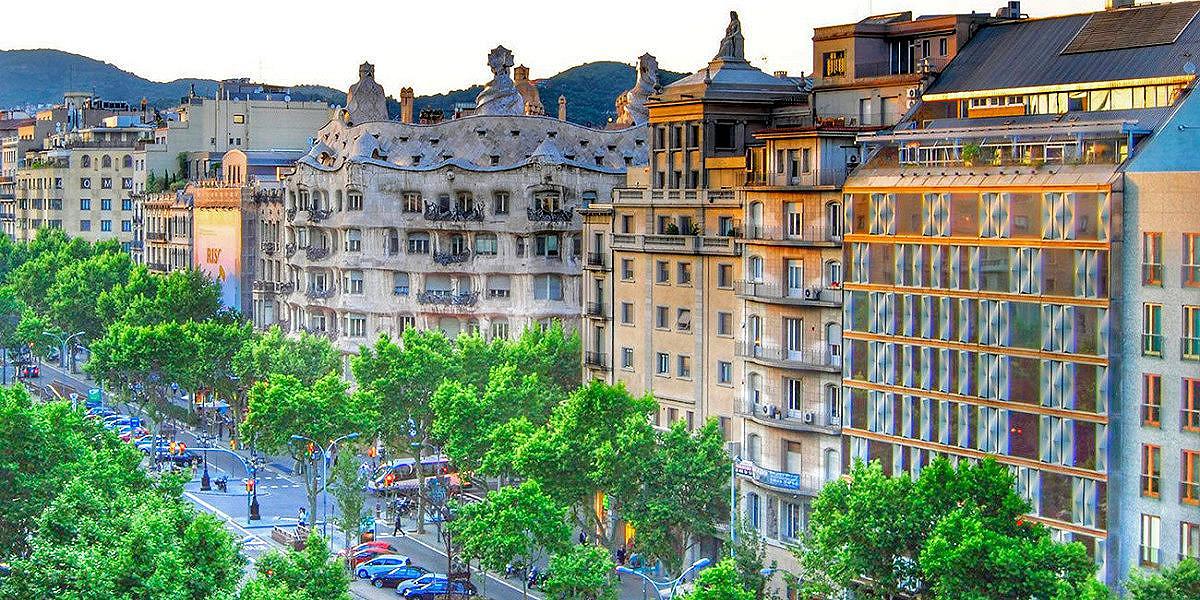
Right Eixample is the most prestigious and architecturally recognisable part of the district. It includes Passeig de Gràcia, Rambla de Catalunya, Casa Batlló, La Pedrera, modernist buildings, offices, boutiques, restaurants and one of Barcelona’s most liquid property markets.
Old Left Eixample
Old Left Eixample is a popular residential area with good infrastructure, healthcare, restaurants, schools, metro access and convenient connections to the city centre. Buyers often purchase here for living, rentals and family use.
New Left Eixample
New Left Eixample is a more practical and, in some places, more accessible part of the district. It has many residential buildings, shops, transport, schools and properties with a good balance between price and location.
Sant Antoni
Sant Antoni is one of the most popular parts of Eixample among young professionals, foreigners and buyers who value restaurants, the market, proximity to the centre and an active urban environment. The area has changed significantly in recent years and has become one of Barcelona’s most sought-after neighbourhoods.
Sagrada Família
Sagrada Família is the area around the basilica. It is a highly recognisable part of Barcelona, with tourist flow, many shops, metro stations and residential buildings. Here it is important to distinguish between streets with heavy tourist pressure and calmer residential blocks.
Fort Pienc
Fort Pienc is the area between Arc de Triomf, Glòries, Right Eixample and Sant Martí. It is interesting for buyers who value transport, proximity to the centre, a more rational budget and the development potential of eastern Barcelona.
Best areas in Eixample for buying property
Right Eixample
Right Eixample is one of the most prestigious markets in Barcelona. Buyers purchase apartments in modernist buildings, penthouses, renovated properties, spacious apartments with high ceilings, historic details, balconies and city views.
The main streets and reference points are Passeig de Gràcia, Rambla de Catalunya, Carrer de Pau Claris, Carrer de Roger de Llúria, Carrer de Girona, Carrer del Bruc, Carrer de Mallorca, Carrer de València, Carrer d’Aragó and areas near Plaça de Catalunya.
Right Eixample suits buyers with a high budget who value prestige, architecture, liquidity, centrality and long-term value. It is one of the best choices for buying quality urban property in Barcelona.
The disadvantages are a high budget, noise on some streets, tourist flow, older housing stock and the need for deep technical checks of the building.
Passeig de Gràcia
Passeig de Gràcia is one of the most expensive and prestigious streets in Barcelona. It has luxury boutiques, high-end hotels, restaurants, offices, modernist buildings and some of the city’s most recognisable properties.
Property on Passeig de Gràcia suits buyers who value status, liquidity, central location and rarity. Apartments in historic buildings with a lift, views, high ceilings, original features and quality renovation are especially valued.
The disadvantages are a very high budget, noise, tourist flow and limited supply of truly high-quality properties.
Rambla de Catalunya
Rambla de Catalunya is a calmer and more residential alternative to Passeig de Gràcia. It is one of the most pleasant streets in Eixample for living, with a wide pedestrian area, restaurants, shops, transport and a prestigious urban environment.
Apartments here are in demand among foreigners, families and buyers who want centrality without excessive tourist pressure. Higher floors, balconies, light, a lift and well-maintained buildings are especially valued.
Carrer d’Enric Granados
Carrer d’Enric Granados is one of the most attractive streets in the Left Eixample. It is known for a calmer atmosphere, restaurants, trees, a pedestrian character and high demand from foreign buyers.
This area suits living, high-level rentals and buying an apartment in a central but more intimate part of the district. Properties with balconies, terraces, natural light and good building condition are especially interesting.
The disadvantages are strong demand, limited supply and prices above the average level for the Left Eixample.
Old Left Eixample
Old Left Eixample is a strong residential area with a good balance between prestige, infrastructure and practicality. It has many restaurants, clinics, schools, shops, metro stations and apartments in classic buildings.
The area suits families, residents, investors and buyers looking for an apartment for year-round living. Areas near Carrer d’Enric Granados, Carrer de Mallorca, Carrer de València, Carrer d’Aragó, Hospital Clínic and Avinguda Diagonal are especially interesting.
The main advantages are infrastructure, transport, liquidity, wide property choice and strong rental appeal. The disadvantages are noise on major streets, older housing stock and strong competition for good apartments.
New Left Eixample
New Left Eixample is a more practical and often more rational area for buying property. Buyers can find apartments with good floor area, a residential atmosphere, schools, shops, transport and access to Sants, Les Corts and the city centre.
The area suits buyers who want to live in Eixample but do not necessarily want to pay the maximum prices of Right Eixample or Passeig de Gràcia. It is interesting for families, long-term rentals, renovation projects and permanent living.
The disadvantages are uneven streets, less architectural charm in some places, noise on major roads and the need to choose the specific block carefully.
Sant Antoni
Sant Antoni is one of the most dynamic areas of Eixample. It has the Sant Antoni market, many restaurants, cafés, bars, shops, metro stations and quick access to El Raval, Poble-sec, the old town and central Barcelona.
Sant Antoni suits buyers who value active urban life, rentals, walkability to the centre and a modern atmosphere. It is a strong choice for investors, young professionals and buyers who want to live in a lively neighbourhood.
The disadvantages are high density, noise in some locations, older housing stock and the need to check the entrance, lift, façade and building condition especially carefully.
Sagrada Família
Sagrada Família is one of Barcelona’s most recognisable areas thanks to the basilica. It has heavy tourist flow, many shops, restaurants, metro stations, residential buildings and a wide price range.
The area suits buying an apartment for living, long-term rentals, medium-term rentals and buyers who value a recognisable location. Calmer streets slightly away from the basilica are especially interesting, as they keep good infrastructure while reducing tourist pressure.
The disadvantages are tourist flow, noise in key locations, varying building quality and the need to assess the specific street carefully.
Fort Pienc
Fort Pienc is a practical area in eastern Eixample. It is located near Arc de Triomf, Estació del Nord, Glòries, Right Eixample and Sant Martí.
Fort Pienc suits buyers who value transport, proximity to the centre, a more rational budget and the potential of eastern Barcelona. Buyers can find apartments for living, rentals, renovation projects and long-term ownership.
The advantages are transport, proximity to the centre, more accessible options compared with Right Eixample and connection with the developing Glòries and Poblenou areas. The disadvantages are uneven streets and lower prestige compared with the central blocks of Eixample.
Where to buy depending on your goal
For living in central Barcelona
It is better to consider Right Eixample, Old Left Eixample, Rambla de Catalunya, Carrer d’Enric Granados, areas near Avinguda Diagonal, Carrer de Mallorca, Carrer de València and quiet blocks close to metro stations.
For a premium purchase
It is better to look at Passeig de Gràcia, Rambla de Catalunya, Right Eixample, Carrer d’Enric Granados, restored modernist buildings, penthouses, apartments with terraces and properties on higher floors.
For family living
Old Left Eixample, New Left Eixample, areas near Carrer d’Enric Granados, Avinguda Diagonal, schools, healthcare, metro stations and quieter streets work well.
For rentals
Right Eixample, Old Left Eixample, Sant Antoni, Sagrada Família, Fort Pienc and areas near metro stations, universities, offices, Hospital Clínic and business routes are interesting.
For renovation projects
Older apartments in the Left Eixample, Sant Antoni, Sagrada Família, Fort Pienc and selected streets of Right Eixample can be considered. But structure, permits, lift, façade, humidity, common expenses and building restrictions must be checked in advance.
For a more rational budget
It is better to look at Sagrada Família, Fort Pienc, New Left Eixample and less tourist-heavy streets. Even with a lower price, buyers should not sacrifice light, a lift, building condition and liquidity.
For maximum liquidity
The most liquid apartments have a lift, good layout, natural light, balcony or terrace, a well-maintained building and a location near the metro. The strongest areas are Right Eixample, Rambla de Catalunya, Carrer d’Enric Granados, Old Left Eixample and Sant Antoni.
Property prices in Eixample
Eixample is one of Barcelona’s expensive districts. The average price benchmark is around €6,500 per square metre, but in reality the range is very wide. Price depends on the street, building, floor level, natural light, lift, renovation condition, terrace, view, historic features, whether the apartment has a tenant and the legal status of the property.
In Right Eixample, on Passeig de Gràcia, Rambla de Catalunya, Carrer d’Enric Granados and in restored modernist buildings, prices can be significantly above the average level. In Sagrada Família, Fort Pienc, New Left Eixample and renovation properties, more accessible options can be found, but liquidity depends on the specific building.
Accessible segment
This is usually linked to renovation properties, lower floors, interior apartments, buildings without a lift, properties with tenants, noisy streets or less prestigious parts of the district.
Mid-range segment
This includes apartments in residential buildings with a lift, normal condition, good floor area and no unique views or terrace, but with a convenient location and clear liquidity.
Premium segment
This includes apartments after quality renovation, higher floors, balconies, terraces, views, good buildings, Right Eixample, Rambla de Catalunya, Carrer d’Enric Granados and properties near Passeig de Gràcia.
High-end segment
This includes penthouses, apartments in modernist buildings, properties with historic features, large terraces, direct views, rare floor areas, private parking spaces and high-level renovation.
A good purchase in Eixample is not simply a price per square metre. It is important to consider the building, entrance, lift, façade, layout, light, noise, orientation, neighbours, community fees, rental restrictions and future resale.
Rental market and investment potential
Eixample is one of the strongest districts in Barcelona for rentals, but the investment strategy must take regulation into account. Barcelona is a high-demand market, but it also has strict rental rules, restrictions on tourist housing and controls over certain rental formats.
For long-term rentals, Eixample remains highly attractive. Local professionals, foreign residents, employees of international companies, students, doctors, entrepreneurs and families live here. Demand is supported by transport, the city centre, offices, healthcare, universities, restaurants and the quality of the urban environment.
For medium-term rentals, it is important to consider the latest rules in Catalonia and Barcelona. Seasonal rental should not be used as a way to bypass permanent-housing regulation. There must be a real reason for temporary residence, and the contract must comply with current requirements.
Tourist rental in Barcelona is a very complex and risky scenario. The city has announced a policy aimed at ending tourist-apartment licences by 2028, so buying a property in Eixample only for tourist rental without legal due diligence and a clear understanding of restrictions is extremely risky.
For investors, more realistic strategies may include long-term rental, buying a liquid apartment for personal use and future resale, buying for renovation with the right budget, or acquiring a family asset for capital preservation.
Lifestyle in Eixample
Eixample is one of the best districts in Barcelona for urban living. Here it is possible to live without a car, walk around the city, use the metro, buses, cycling infrastructure, restaurants, shops, clinics, schools and the cultural environment.
The district suits buyers who want to be in central Barcelona, but not in the chaotic environment of the old town. Compared with the Gothic Quarter, El Born or El Raval, Eixample usually offers more light, wider streets, larger apartments, better transport and a more regular urban structure.
Right Eixample offers prestige, architecture and a business environment. Left Eixample offers comfortable residential living, restaurants and practicality. Sant Antoni offers energy, the market and a modern atmosphere. Sagrada Família offers recognisability and tourist flow. Fort Pienc offers transport and rationality.
The main advantage of Eixample is versatility. It is a district that works for living, rentals, capital preservation and buying prestigious property in Barcelona.
Schools, healthcare and everyday infrastructure
Eixample is well suited to year-round living. The district and nearby areas have schools, nurseries, language centres, medical clinics, hospitals, private specialists, shops, fitness clubs, restaurants, markets and services for foreign residents.
One of the important reference points is Hospital Clínic and the medical cluster around it. This makes part of the Left Eixample especially attractive for doctors, students, professionals, families and tenants who value healthcare and transport.
For families, it is important to assess not only the apartment, but also daily logistics: school, metro, noise, street safety, lift, parking, supermarkets, walking areas and proximity to parks.
Eixample is a dense urban district, so buyers with children should pay particular attention to noise, floor level, window orientation, proximity to major streets, inner courtyards and nearby green areas.
Transport and connections
Eixample is one of the best districts in Barcelona for transport accessibility. It has many metro lines, bus routes, cycling lanes, taxis and quick access to Plaça de Catalunya, Avinguda Diagonal, Sants station, the airport and the city’s business areas.
Key stations and transport hubs depend on the part of the district: Plaça de Catalunya, Passeig de Gràcia, Diagonal, Urgell, Universitat, Hospital Clínic, Sagrada Família, Verdaguer, Monumental, Tetuan and other stations make the area convenient for living without a car.
Transport has a direct impact on property value. An apartment near the metro, but not on a noisy main road, is usually more liquid. A property close to good transport connections, shops and everyday infrastructure will be easier to rent out and resell.
When buying, it is important to assess not only the distance to the metro, but also noise, traffic, street condition, parking, taxi availability, cycling infrastructure and routes to school, work or the airport.
Taxes, costs and legal due diligence
When buying property in Eixample, it is important to calculate not only the purchase price, but also all additional costs.
For resale property in Catalonia, ITP, the property transfer tax, applies. From 2026, it is calculated on a progressive scale: the base rate depends on the property value and can increase for more expensive purchases. For new-build properties, IVA and AJD usually apply. Buyers should also consider notary fees, land registry fees, legal support, bank costs for a mortgage, valuation, IBI property tax, community fees, insurance and future maintenance costs.
Before buying, it is necessary to check the Nota Simple, the owner, encumbrances, mortgage charges, debts, tenants, lease term and conditions, community fees, IBI, energy certificate, building condition, lift, façade, roof, renovation permits and possible restrictions.
In Eixample, it is especially important to check old buildings. Many buildings are beautiful, but require careful technical assessment: structure, floors, humidity, inner courtyards, entrance condition, lift, façade, ITE inspection, future repair works and community contributions.
If the property is being bought for rental purposes, applicable rules must be checked separately: long-term rental, seasonal rental, room rental, tourist rental, building restrictions and Barcelona regulations. A buyer should not purchase an apartment in Eixample with the expectation of tourist rental without professional legal due diligence.
Common mistakes foreign buyers make
The most common mistake is buying an apartment in Eixample only because of a beautiful building or central street. It is important to check light, noise, floor level, lift, building condition, façade, ITE, neighbours, costs and legal status.
The second mistake is underestimating older housing stock. Modernist and classic buildings can be very beautiful, but renovation in them is often more complex and expensive than buyers expect.
The third mistake is relying on tourist rental. In Barcelona, this scenario is highly restricted, and the city is moving towards ending tourist-apartment licences. Investors should build their strategy around long-term or legal medium-term rental, not around a short-term tourist model.
The fourth mistake is not checking whether the property has a tenant. An apartment with an active lease may have restrictions on use, yield and the timing of vacant possession.
The fifth mistake is buying an interior or dark apartment only because of a lower price. In Eixample, light, orientation and floor level are critical for liquidity.
The sixth mistake is not calculating community fees. In older buildings, future repairs may include the façade, roof, lift, utilities or inner courtyards.
Eixample or alternatives in Barcelona
Eixample or the Old Town
The Old Town offers history, atmosphere and a tourist environment, but often has narrow streets, older housing stock, less light and more restrictions. Eixample is usually more convenient for living, more liquid for families and more practical for long-term ownership.
Eixample or Gràcia
Gràcia is more local, intimate and village-like in atmosphere. Eixample is more central, prestigious, regular in layout and stronger in the premium urban segment.
Eixample or Sarrià-Sant Gervasi
Sarrià-Sant Gervasi is calmer, more family-oriented and more prestigious in a residential sense, especially for schools and larger apartments. Eixample is more central, more dynamic and better suited to urban living without a car.
Eixample or Poblenou
Poblenou is closer to the sea and modern office areas, but less classic and less central. Eixample is stronger in architecture, prestige, transport accessibility and historic liquidity.
Eixample or Diagonal Mar
Diagonal Mar offers modern complexes, the sea, parking and views. Eixample offers the city centre, architecture, restaurants, walkability and more classic Barcelona.
Eixample or Les Corts
Les Corts is more practical, calmer and can be more convenient for families and business areas. Eixample is more central, more expensive and stronger as an urban investment market.
FAQ
Can foreigners buy property in Eixample?
Yes, foreigners can freely buy property in Barcelona and Catalonia. A transaction usually requires an NIE, a bank account, proof of funds and legal due diligence on the property.
Where is the best place to buy an apartment in Eixample for living?
For living, Right Eixample, Old Left Eixample, Rambla de Catalunya, Carrer d’Enric Granados, quiet blocks near Avinguda Diagonal, Sant Antoni and areas with good metro access are good options.
Where are the most prestigious areas of Eixample?
The most prestigious areas are Passeig de Gràcia, Rambla de Catalunya, Right Eixample, Carrer d’Enric Granados, modernist buildings and penthouses with terraces.
Where can property be bought more affordably in Eixample?
More rational options are usually found in Sagrada Família, Fort Pienc, New Left Eixample, less prestigious streets and renovation properties.
How much does property in Eixample cost?
The average benchmark is around €6,500 per square metre, but in premium properties on Passeig de Gràcia, Rambla de Catalunya, Carrer d’Enric Granados and restored modernist buildings, prices can be significantly higher.
Can an apartment in Eixample be rented to tourists?
Tourist rental in Barcelona is highly restricted, and the city is moving towards ending tourist-apartment licences by 2028. Before buying, the legal status of the property must be checked carefully, and buyers should not rely on tourist rental without legal confirmation.
Is Eixample suitable for long-term rental?
Yes, Eixample is one of Barcelona’s most sought-after districts for long-term rentals. But rental regulation, price indexes, property condition, costs and tenant profile must be considered.
Which is better: Right or Left Eixample?
Right Eixample is usually more prestigious and more expensive, especially near Passeig de Gràcia. Left Eixample is often more practical for living, families and rentals, while Carrer d’Enric Granados is considered one of the most attractive areas.
What taxes apply when buying an apartment in Eixample?
For resale property in Catalonia, ITP applies on a progressive scale. For new-build properties, IVA and AJD usually apply. Buyers should also consider notary fees, land registry fees, legal support, bank costs, valuation and maintenance costs.
Can foreigners get a mortgage in Spain?
Yes, Spanish banks provide mortgages to foreigners. Conditions depend on residence status, income, country of tax residence, income currency, buyer age and property type.
How long does a transaction take?
A transaction usually takes from several weeks to several months. For older buildings, renovation properties, apartments with tenants or properties with legal nuances, the timeline can be longer.
Get a personalised selection of properties in Eixample, Barcelona
We will compare the zones of the district, calculate the full purchase budget, check legal risks, assess rental potential and select properties for your goal: living in central Barcelona, investment, rental, family relocation, buying an apartment for children, a premium urban asset, a penthouse, renovation property or capital preservation.