Areas, prices, rentals, taxes and the best zones to buy property in Palma de Mallorca
Key facts about Palma de Mallorca for property buyers
Palma de Mallorca is one of the strongest and most liquid real estate markets in Spain. It is the capital of the Balearic Islands, the main city of Mallorca, a major port, business centre, cultural capital of the island and one of the most sought-after Mediterranean locations among foreign buyers.
For foreign buyers, Palma de Mallorca is interesting in several scenarios: buying an apartment in the historic centre, purchasing apartments close to the sea, buying a penthouse with a terrace, investing in rental property, buying a holiday home in Mallorca, relocating with family, acquiring a property for a future move, buying real estate close to the port or purchasing a liquid asset in one of Spain’s most international capitals.
Palma de Mallorca is not the most accessible market in the Balearic Islands, but it is one of the most resilient. Here it is important to look not only at the price per square metre, but also at the area, building condition, lift, terrace, views, parking, legal clarity, rental rules, community fees and future liquidity.
What foreign buyers should know about Palma de Mallorca
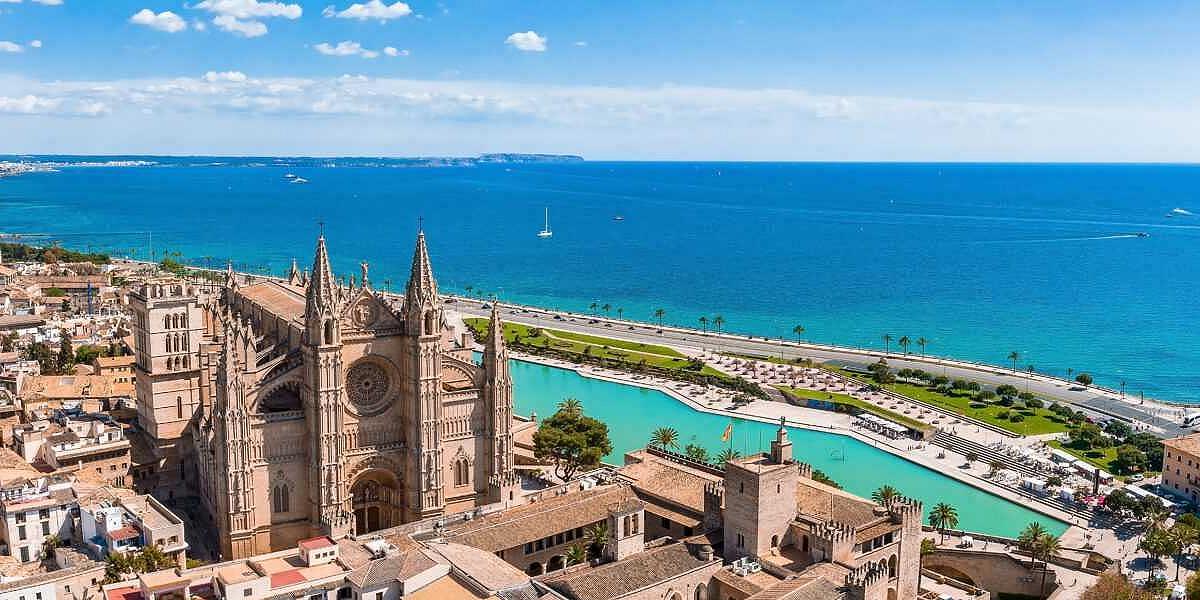
Palma de Mallorca is the capital of the autonomous community of the Balearic Islands and the largest city in Mallorca. The city is located on the south-western coast of the island, in the large Bay of Palma, and is the main economic, administrative, transport and cultural centre of the archipelago.
The population of Palma exceeds 430,000 people, while the actual number of people in the city and surrounding areas increases noticeably in high season thanks to tourists, holiday-home owners, tenants, international residents and business activity.
The average property price benchmark in Palma de Mallorca is around €5,100–€5,200 per square metre, but this figure should not be treated as a universal price for every property. In the Old Town, Santa Catalina, Son Vida, Portixol, Molinar, Bonanova, Calatrava, La Lonja and sea-view properties, quality real estate often costs above the average level.
The main value of Palma de Mallorca is the combination of an island lifestyle and full urban infrastructure. Buyers get not only property in Mallorca, but also access to the airport, marina, ports, schools, healthcare, restaurants, business environment, cultural life and one of the most recognisable real estate markets in the Mediterranean.
Buyers should understand that Palma is not uniform. The Old Town, Santa Catalina, La Lonja, Calatrava, Portixol, Molinar, Son Vida, Bonanova, El Terreno, San Agustín, Playa de Palma, Génova, Arabella and residential areas around the centre offer different lifestyles, budgets, rental profiles and liquidity.
Why foreigners buy property in Palma de Mallorca
Palma de Mallorca attracts foreign buyers not only because of the sea and climate. It is a rare market where the island format is combined with the infrastructure of a large city: an international airport, port, business environment, schools, healthcare, restaurants, cultural life, yachting, sport and a strong rental market.
The main reasons for buying are Mallorca, the sea, international airport, historic centre, port, marina, restaurants, schools, healthcare, rentals, climate, quality of life, limited supply in the best areas and high international recognition.
For many buyers, Palma becomes an alternative to Barcelona, Marbella, Valencia, Ibiza, the Costa Brava, the French Riviera and other premium Mediterranean markets. Unlike purely resort areas, Palma is alive all year round. Unlike smaller towns in Mallorca, it offers more infrastructure, liquidity and rental opportunities. Unlike mainland cities, Palma offers an island format and a softer rhythm of life.
An important advantage of Palma is international liquidity. A good property here is clear to buyers from Germany, the United Kingdom, Scandinavia, France, Switzerland, the Netherlands, Austria, the United States and other markets. This supports demand for city-centre apartments, penthouses, seaside apartments, villas, townhouses and properties with terraces.
Who buys property in Palma de Mallorca
Foreign demand in Palma is diverse. Different buyers choose different areas, budgets and property types.
Foreign residents
They buy homes for permanent living in Mallorca. Schools, healthcare, security, parking, transport, shops, restaurants, sport, airport access and a comfortable year-round urban environment are important to them.
Foreign non-residents
They usually buy a property for holidays, long-term ownership, rentals, a future move or capital preservation. Property management, liquidity, legal clarity, costs and the ability to safely own the property from another country are especially important.
City-centre apartment buyers
They consider the Old Town, La Lonja, Calatrava, Santa Catalina, Born, Jaime III and areas close to the seafront. Architecture, terrace, lift, building condition, views and walking distance to restaurants are important.
Penthouse buyers
They look for terraces, sea or city views, privacy, lift, parking, building condition and a strong location. Penthouses in Palma are especially valued because supply is limited.
Villa and house buyers
They consider Son Vida, Génova, Bonanova, San Agustín, Arabella and areas with plots, swimming pools, views and quick access to the centre.
Families with children
They choose areas with international schools, parking, a safe environment, larger floor areas, green zones, sport and good connections with the airport and the centre.
Investors
They look at the Old Town, Santa Catalina, Portixol, Molinar, La Lonja, Calatrava, Bonanova, San Agustín and properties with clear demand for long-term, medium-term or seasonal rentals.
Palma de Mallorca geography in simple terms
Palma is best understood through several key zones: the Old Town, La Lonja, Calatrava, Born, Santa Catalina, Portixol, Molinar, Son Vida, Bonanova, El Terreno, San Agustín, Génova, Playa de Palma and residential areas around the centre.
Old Town
Palma’s Old Town means historic architecture, palaces, narrow streets, inner patios, boutique hotels, restaurants, La Seu Cathedral, shops and high international liquidity. Buyers choose this area when they want to live in the most recognisable part of the city.
La Lonja
La Lonja is one of the most atmospheric zones close to the port and the Old Town. It has many restaurants, historic buildings, apartments, renovation properties and real estate for buyers who value walkable city life.
Calatrava
Calatrava is a prestigious part of the Old Town closer to the sea and the cathedral. Restored buildings, apartments with terraces, views, calmness and historic character are especially valued here.
Born and Jaime III
These are Palma’s central retail and business areas. They suit buyers who value shops, restaurants, office environment, a prestigious address and the convenience of urban life.
Santa Catalina
Santa Catalina is one of Palma’s trendiest and most sought-after districts. It has a market, restaurants, bars, apartments, townhouses, penthouses and strong demand among foreign buyers.
Portixol
Portixol is a former fishing district by the sea that has become one of Palma’s most desirable areas. The seafront, restaurants, beach environment, houses by the sea and apartments with strong liquidity are valued here.
Molinar
Molinar continues Portixol’s coastal line and offers a calmer residential format close to the sea. It is a strong area for buyers who value walks, the beach, restaurants and quality of life by the water.
Son Vida
Son Vida is Palma’s most prestigious villa area. Buyers purchase houses, villas, plots and high-level properties with views, privacy, golf and security here.
Bonanova
Bonanova is a prestigious residential area above the port and close to international infrastructure. Buyers can find apartments, houses, villas and properties with sea or city views here.
El Terreno
El Terreno is a district close to the port and Bellver that is undergoing renewal. It is interesting for buyers looking for a location with potential, proximity to the centre and a more urban character.
San Agustín
San Agustín is located closer to the western part of Palma and the sea. The area is interesting for apartments with views, proximity to beaches, ports, international schools and Mallorca’s south-western direction.
Génova
Génova is a calm residential area on the hills, where buyers purchase houses, villas and apartments with views. It suits those who want to live close to Palma but in a more private and green environment.
Best areas in Palma de Mallorca for buying property
Old Town
Palma’s Old Town is one of the strongest areas for buying property in Mallorca. It combines historic architecture, prestige, restaurants, shops, cultural life and high international liquidity.
The location suits buying an apartment, penthouse, property with a patio, renovation property, holiday home and long-term ownership. Restored buildings, lifts, terraces, parking, views and correct legal status are especially valued.
The main advantages are prestige, liquidity, architecture and walkable life. The disadvantages are older housing stock, limited parking, restoration requirements and the need for careful legal due diligence.
Santa Catalina
Santa Catalina is one of the most popular areas among foreign buyers. The district is known for its market, restaurants, bars, international environment and proximity to the centre and the seafront.
Apartments, penthouses, townhouses, properties with terraces and real estate after quality renovation are especially interesting here. The location suits living, rentals, holidays and long-term ownership.
Portixol
Portixol is one of Palma’s most desirable seaside areas. Houses and apartments by the sea, properties close to the seafront, restaurants and the beach are especially valued here.
The location suits buyers who value the sea, walks, liquidity, rentals and rare supply. The best properties in Portixol usually find demand quickly.
Molinar
Molinar suits buyers who want to live by the sea but in a calmer and more residential environment than the most active part of Portixol.
Apartments, houses, townhouses, properties with terraces and real estate close to the seafront are interesting here. Building condition, views, parking and distance to the sea should be considered.
Calatrava and La Lonja
Calatrava and La Lonja suit buyers who want the historic centre, architecture, views, walkability and a strong urban lifestyle. These areas are especially interesting for high-level apartments and restored properties.
When buying, it is important to check the building, lift, technical condition, renovation rules, property status and possible restrictions related to historic buildings carefully.
Son Vida
Son Vida is Palma’s main villa area and one of Mallorca’s most prestigious locations. Buyers purchase villas, modern houses, properties with views, swimming pools, large plots and quick access to the centre here.
The location suits premium-property buyers, families, the golf audience and clients who value privacy, security and status.
Bonanova
Bonanova suits buyers who value views, calmness, proximity to the centre, ports, schools and Palma’s western districts. Buyers can find apartments, penthouses, houses and villas here.
It is a good area for permanent living, family scenarios and buyers who want more space than in the centre.
San Agustín
San Agustín is interesting for buyers who value the sea, views, proximity to ports, beaches, schools and the south-western direction of the island. Apartments, flats, penthouses and houses can be found here.
The location suits living, rentals and buying a property by the sea with quick access to Palma.
Where to buy depending on your goal
For city-centre living
It is better to consider the Old Town, La Lonja, Calatrava, Born, Jaime III and Santa Catalina. Lift, terrace, building condition, parking and noise level are important here.
For seaside living
Portixol, Molinar, San Agustín, Bonanova, areas near the seafront and properties with quick access to the beach or marina work better.
For buying a villa
It is worth looking at Son Vida, Génova, Bonanova, San Agustín, Arabella and selected hilly areas around Palma.
For rentals
The Old Town, Santa Catalina, La Lonja, Calatrava, Portixol, Molinar, San Agustín, Bonanova and properties with terraces, lifts, good renovation and strong locations are interesting.
For family living
Son Vida, Bonanova, Génova, San Agustín, Arabella, Molinar and areas with parking, schools, green zones and a calmer environment work better.
For premium property
Son Vida, the Old Town, Calatrava, Portixol, Bonanova, penthouses with terraces, villas with views and properties with architectural value are the most interesting.
For holiday homes
The Old Town, Santa Catalina, Portixol, Molinar, San Agustín, La Lonja and apartments that are easy to manage without permanent residence are suitable.
For a limited budget
It is worth looking not only at the Old Town and Portixol, but also at El Terreno, Pere Garau, parts of Levante, residential areas farther from the frontline, renovation properties and apartments without views. But a lower price in Palma almost always requires careful checks of the building, legal status, costs and real liquidity.
Property prices in Palma de Mallorca
Palma de Mallorca is one of the most expensive urban real estate markets in Spain. The average benchmark for the city is around €5,100–€5,200 per square metre, but this figure should not be treated as a universal price for every property.
In the Old Town, Calatrava, La Lonja, Santa Catalina, Portixol, Molinar, Son Vida, Bonanova, San Agustín, penthouses with terraces, villas with views, houses by the sea and restored properties, quality real estate usually costs above the average level.
In El Terreno, Pere Garau, residential areas farther from the centre, renovation properties, apartments without lifts, older housing stock or properties without terraces, prices may be lower. But a lower price almost always requires additional checks: building condition, façade, lift, humidity, legal status, renovation permits, community fees, parking and future liquidity.
A good purchase in Palma is not the cheapest square metre. It is a property with the right location, clean documents, strong demand, good condition and a clear usage strategy.
Rental market and investment potential
Palma de Mallorca remains one of the strongest rental markets in Spain thanks to limited supply, high demand, international audience, business activity, tourism, university and professional environment, as well as the year-round life of the city.
The main workable scenarios are long-term rental, medium-term rental, seasonal rental subject to rules, rental of city-centre apartments, penthouse rental, rental of properties by the sea, rental to families and buying a property with the possibility of personal use.
For investors, the Old Town, Santa Catalina, La Lonja, Calatrava, Portixol, Molinar, San Agustín, Bonanova and properties with lifts, terraces, good renovation, parking and a clear rental strategy are especially interesting.
Tourist rental in Mallorca is strictly regulated, so any purchase based on short-term rental should be checked separately. It is important to confirm the possibility of registration, the existence of a licence or legal model, community-of-owners rules, municipal restrictions and compliance with property requirements.
For most foreign buyers, a safer strategy is to calculate based on long-term or medium-term rental with a clear legal model, as well as personal use of the property. In Palma, management quality, legal due diligence and correct positioning of the property are especially important.
Lifestyle in Palma de Mallorca
Palma de Mallorca is a rare combination of island, sea and real city. Here buyers can live close to the historic centre, walk along the seafront, use marinas, visit restaurants, work remotely, go to the mountains, travel to beaches and still quickly reach the international airport.
The city is suitable for year-round living. Unlike small resort locations in Mallorca, Palma does not stop in winter. It has permanent residents, business, schools, healthcare, restaurants, cultural events, shops and an active international environment.
The main advantages of Palma are the airport, port, Old Town, seafront, restaurants, architecture, healthcare, schools, business environment, yachting and quick access to Mallorca’s best areas.
Buyers get not only real estate, but a lifestyle: a city by the sea, island atmosphere, European infrastructure, security, international neighbours and the high status of owning property in Mallorca.
Schools, healthcare and everyday infrastructure
Palma de Mallorca suits permanent living, especially for buyers who value schools, healthcare, transport, airport access, sport, restaurants, international environment and full urban infrastructure.
The city and nearby areas have state, private and international schools, medical centres, clinics, a university environment, sports clubs, yacht marinas, fitness clubs, supermarkets, markets and services for foreign residents.
For families, areas with good logistics, parking, security, schools, healthcare and a calm residential environment are especially important. Son Vida, Bonanova, Génova, San Agustín, Arabella, Molinar and selected areas around the centre work well for family living.
When buying for family use or permanent residence, buyers should assess not only the property itself, but also daily logistics: school, healthcare, supermarket, sport, beach, traffic, parking, security and distance to the airport.
Transport and connections
Palma de Mallorca is Mallorca’s main transport hub. It has an international airport, port, marina, bus network, urban infrastructure and connections with other areas of the island.
For buyers, quick access to the airport is important because many foreign owners use their property seasonally or live between several countries. Palma is especially convenient for those who want to own property on an island without losing connection with mainland Europe.
In the centre, Old Town, Santa Catalina, La Lonja, Portixol and Molinar, it is possible to live more on foot. For Son Vida, Génova, Bonanova, San Agustín, Arabella and villa areas, a car is usually important.
Transport has a direct impact on property value. A property close to the centre, sea, schools, port, airport and main roads is usually more liquid for rentals and resale than a property with a beautiful image but weak logistics.
Taxes, costs and legal due diligence
When buying property in Palma de Mallorca, it is important to calculate not only the property price, but also all additional costs.
For resale property in the Balearic Islands, ITP, the property transfer tax, applies. It is calculated on a progressive scale: 8% on the first €400,000, 9% on the next portion up to €600,000, 10% on the portion up to €1 million and 12% on the amount above €1 million. For new-build properties, IVA and AJD usually apply.
Buyers should also consider notary fees, land registry fees, legal support, bank costs for a mortgage, valuation, community fees, IBI property tax, insurance and future maintenance costs.
Before buying, it is necessary to check the Nota Simple, the owner, encumbrances, mortgage charges, debts, community fees, tenants, building condition, parking space, storage room, terrace and the tourist or rental status of the property if it is being bought for letting.
In Palma, it is especially important to check historic buildings, renovation properties, façades, roofs, lifts, humidity, restoration restrictions, work permits, actual built area, terrace status and the possibility of legally using the property according to the chosen strategy.
Common mistakes foreign buyers make
The most common mistake is buying a property only because of the name “Palma” or “Mallorca”. Inside the city, there are different levels of locations, buildings, views, noise, rentals and liquidity.
Another mistake is failing to distinguish between the Old Town, Santa Catalina, Portixol, Molinar, Son Vida, Bonanova, San Agustín and El Terreno. These locations offer different lifestyles, budgets, rental profiles and future demand.
Buyers often underestimate the complexity of older housing stock. An apartment in a beautiful historic building may require checks of the façade, roof, lift, humidity, permits, structure and restoration rules.
A separate risk is buying only with the expectation of short-term rental. In Mallorca and Palma, tourist housing regulation is strict, so buyers should check the legal possibility of such a strategy in advance.
Another mistake is failing to consider parking. In Palma’s central districts, a parking space can be an important factor for comfort, liquidity and resale.
Palma de Mallorca or alternatives
Palma de Mallorca or Ibiza
Ibiza is more exclusive, seasonal and expensive in selected premium segments. Palma is more urban, year-round and practical for living, schools, healthcare and the business environment.
Palma de Mallorca or Marbella
Marbella is stronger as a mainland premium market with golf, villas and a large choice of gated urbanisations. Palma benefits from its island format, historic centre, nearby airport and city by the sea.
Palma de Mallorca or Barcelona
Barcelona is larger, more business-oriented and more dynamic. Palma is calmer, more compact, closer to nature and offers an island lifestyle while preserving urban infrastructure.
Palma de Mallorca or Sóller
Sóller is more intimate, natural and traditional. Palma is better for permanent living, schools, healthcare, rentals, airport access and urban infrastructure.
Palma de Mallorca or Andratx
Andratx and Port d’Andratx are stronger as premium villa and yachting locations. Palma is more universal, urban and liquid for different purchase scenarios.
Palma de Mallorca or Portixol
Portixol is effectively part of Palma and one of the city’s best seaside areas. If the buyer needs a city by the sea with walkable life, Portixol can be an ideal choice, but supply there is limited and often above the average level.
FAQ
Can foreigners buy property in Palma de Mallorca?
Yes, foreigners can freely buy property in Spain and the Balearic Islands. A transaction usually requires an NIE, a bank account, proof of funds and legal due diligence on the property.
Where is Palma de Mallorca located?
Palma de Mallorca is located on the island of Mallorca and is the capital of the Balearic Islands. The city is situated on the south-western coast of the island, in the large Bay of Palma.
Is Palma de Mallorca suitable for year-round living?
Yes, Palma is suitable for year-round living. It has schools, healthcare, shops, restaurants, port, airport, sport, cultural life and an international environment.
Where is the best place to buy property in Palma de Mallorca?
For the centre, the Old Town, La Lonja, Calatrava and Santa Catalina are interesting. For seaside living, Portixol, Molinar and San Agustín are worth considering. For villas and the premium segment, Son Vida, Génova and Bonanova are strong options.
How much does property in Palma de Mallorca cost?
The average benchmark for the city is around €5,100–€5,200 per square metre. In the Old Town, Santa Catalina, Portixol, Molinar, Son Vida, Bonanova, penthouses and seaside properties, prices can be above the average level.
Is Palma de Mallorca suitable for rentals?
Yes, Palma is interesting for long-term and medium-term rentals thanks to limited supply, high demand, international audience, schools, healthcare, business environment and the year-round life of the city.
Can property be rented to tourists?
Tourist rental in Mallorca is strictly regulated, so buyers need to check registration possibilities, the existence of a licence, community-of-owners rules and municipal restrictions.
Which is better: Palma de Mallorca or Marbella?
Marbella is better for golf, villas and gated urbanisations. Palma is better for buyers who value an island, historic centre, nearby airport, urban life and property in Mallorca.
What taxes apply when buying property in Palma de Mallorca?
For resale property in the Balearic Islands, ITP applies on a progressive scale: 8% on the first €400,000, 9% on the next portion up to €600,000, 10% on the portion up to €1 million and 12% on the amount above €1 million. For new-build properties, IVA and AJD usually apply.
How long does a transaction take?
A transaction usually takes from several weeks to several months. For properties with tenants, mortgages, tourist use, historic buildings, complex legal due diligence or renovation properties, the timeline can be longer.
Get a personalised selection of properties in Palma de Mallorca
We will compare the areas of Palma de Mallorca, calculate the full purchase budget, check legal risks and select properties for your goal: living in Mallorca, investment, rental, buying a city-centre apartment, a penthouse with a terrace, seaside apartments, a villa in Son Vida, a property for a future move, holiday property or capital preservation.