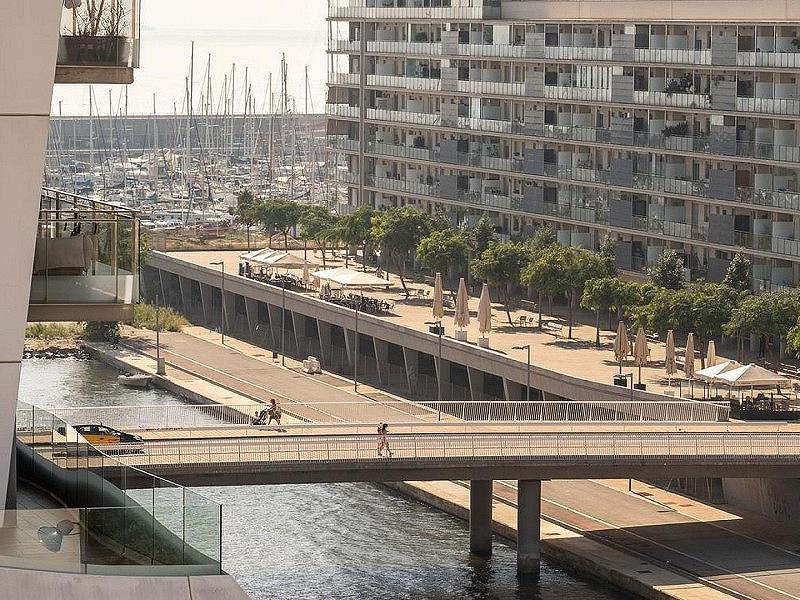
How much housing costs in Spain, why prices are rising and how buyers can choose the right strategy
Property prices in Spain in 2026 continue to rise. For foreign buyers, this is one of the main questions before a transaction: how much does housing cost in Spain, why does one city cost twice as much as another, where is the price justified, where is a property overpriced, and how can you avoid making a mistake when buying?
Spain is no longer a market where you can rely only on the average price per square metre. The average figure helps to understand the general background, but the real decision is made at the level of a specific city, district, building and property.
An apartment in Valencia, a house in Alicante, an apartment in Marbella, a villa in Mallorca, a penthouse in Barcelona, a property in Tenerife or a studio in a small inland town are different markets. They have different buyers, tenants, taxes, liquidity, expenses and risks.
This article explains how property prices in Spain work, which regions are more expensive, why the market is growing, where the price may be justified and where buyers need to be especially careful.
Key Takeaways on Property Prices in Spain
The average property price in Spain on the listings market in 2026 is approximately €2,700–2,800/m². But this figure should not be taken as a benchmark for every property.
In reality, the Spanish market is divided into several levels. In small towns and inland areas, housing can be found significantly below the average level. In large cities, coastal areas, islands and international premium locations, prices can be several times higher.
In Madrid, Barcelona, Palma de Mallorca, Ibiza, Marbella, Puerto Banús, the Golden Mile, Nueva Andalucía, Costa Adeje and the best areas of Valencia, buyers are often dealing not with the average Spanish market, but with a separate international segment.
The main conclusion: property prices in Spain depend not on the country as a whole, but on a combination of location, property quality, building condition, legal clarity, rental potential, demand and future liquidity.
Buyers should look not only at the price per square metre, but also at who the future buyer or tenant of this property will be. Liquidity is what determines how strong the purchase will be in 5–10 years.
Why Property Prices in Spain Are Rising
The growth of housing prices in Spain is not linked to one factor, but to a combination of several reasons.
Shortage of ready-to-buy supply
Spain lacks quality housing in places where people genuinely want to live: large cities, coastal areas, islands, university zones, districts close to transport, parks, schools, the sea and business infrastructure.
There may be many listings on the market, but few truly liquid properties. Buyers often see apartments without a lift, with poor building condition, weak layouts, legal issues or inflated prices.
Growing demand from local buyers
Spanish families, young professionals, students, entrepreneurs and residents continue to create stable domestic demand. This is especially noticeable in Madrid, Barcelona, Valencia, Málaga, Seville, Alicante and other large cities.
Foreign buyers
Foreigners remain an important part of the market. They are especially active in Andalusia, the Valencian Community, Catalonia, Madrid, the Balearic Islands and the Canary Islands. For many buyers, Spain is not only about holidays, but also relocation, rental income, investment and capital preservation.
Rental growth
In many cities, rental prices are growing faster than local incomes. This increases investor interest and pushes some families towards buying if they can obtain a mortgage.
Limited new construction
New housing is being built, but the volume of ready product does not cover demand. In good areas, land is scarce, permits are complex, construction is expensive, and new projects often enter the market in a higher price segment.
Inflation in construction costs
Materials, labour, energy-efficiency requirements, land and financing affect the cost of new housing. This supports high prices for new-build properties and indirectly influences the resale market.
Average Price in Spain and Why It Solves Little
The average price in Spain is useful as the general temperature of the market, but it does not help make a specific decision.
If the average price is around €2,700–2,800/m², this does not mean that a buyer will find a good apartment in Barcelona, Madrid, Palma, Ibiza, Marbella or Costa Adeje at that level. In strong locations, the cost can be two or three times higher.
On the other hand, in small towns, inland provinces, older housing stock or low-demand districts, properties can be found below the average level. But a low price does not always mean a good purchase. Sometimes it reflects weak liquidity, poor building condition, lack of rental demand or lack of future demand.
Buyers need to separate three concepts:
average price in Spain;
average price in the city;
real price of a quality property in the right district.
It is the third figure that matters for the transaction.
The Most Expensive Property Markets in Spain
The most expensive markets in Spain are not only the largest cities, but also islands, premium coastal zones and areas with limited supply.
Madrid
Madrid is Spain’s main business market. In good areas of the capital, prices are significantly above the national average. Demand is supported by employment, education, business, rental demand, international companies and domestic Spanish demand.
Barcelona
Barcelona remains one of the most expensive and international markets in Spain. High demand is supported by the sea, business, universities, healthcare, tourism, architecture and limited supply in the best districts.
Palma de Mallorca
Palma is one of the most expensive urban markets in the Mediterranean. It combines an island format, airport access, historic centre, port, international demand and limited supply.
Ibiza
Ibiza town and the best areas of the island are among the most expensive markets in Spain. The reasons are land scarcity, international demand, seasonal rental demand, island status and limited supply of quality properties.
Marbella and Costa del Sol
Marbella, the Golden Mile, Puerto Banús, Nueva Andalucía, Sierra Blanca, Benahavís and La Zagaleta form one of Spain’s strongest premium markets. Here, buyers pay for climate, golf, villas, international schools, security, views and prestige.
Costa Adeje
Costa Adeje in Tenerife is one of the strongest markets in the Canary Islands. High prices are supported by the year-round climate, tourist demand, the ocean, premium infrastructure and limited supply in the best areas.
More Accessible Markets in Spain
Spain still offers more accessible markets, but they require careful analysis.
Alicante
Alicante remains one of the clearest cities for foreign buyers. It has the sea, an airport, urban infrastructure and a more accessible entry level compared with Barcelona, Madrid, Marbella or Palma.
Torrevieja and Orihuela Costa
These areas are popular among buyers looking for housing by the sea with a more moderate budget. There are many foreigners, apartments, urbanisations and holiday properties. But buyers need to carefully assess the exact location and quality of the complex.
Valencia
Valencia is no longer cheap, but compared with Madrid, Barcelona, Palma and Marbella, it remains more accessible in many segments. At the same time, the city offers the sea, universities, metro, airport, Turia Park and strong rental demand.
Málaga
Málaga has become noticeably more expensive, but it can still be an interesting alternative to the more expensive premium areas of Costa del Sol. It is important to distinguish between the city itself, the suburbs and elite coastal locations.
Murcia, Castellón, Almería and inland areas
These markets may be more affordable, but they require especially careful liquidity assessment. A low entry budget does not always mean a strong investment.
Price per m²: Why It Can Be Misleading
Price per square metre is a convenient indicator, but it often misleads buyers.
Two apartments may have the same price per m², but be completely different in quality. One may be located in a good building with a lift, parking, terrace and the right location. The other may be in an old building without a lift, with damp, noise and weak liquidity.
Price per m² does not show:
building condition;
availability of a lift;
renovation quality;
legal clarity;
noise level;
parking availability;
comunidad expenses;
view;
orientation;
layout;
district liquidity;
real rental demand;
future renovation costs.
That is why professional property analysis must always go deeper than a simple €/m² comparison.
Sometimes a property above the average level is a better purchase if it is located in a strong area, does not require renovation, rents easily and will be in demand at resale.
Conversely, a property below the average level can turn out to be a weak asset if it is difficult to rent out, expensive to renovate or hard to sell in the future.
New-Build and Resale Market: Where Prices Are Higher
In Spain, new-build properties usually cost more than resale housing. The reasons are clear: new construction, energy efficiency, lift, parking, common areas, swimming pool, modern layout, developer warranty and fewer technical risks in the first years.
But a new-build is not always better. Buyers need to assess the area, developer quality, completion deadlines, legal status of the project, future infrastructure and liquidity.
The resale market offers a wider choice. It includes strong properties in the best areas, historic buildings, apartments with character, seaside apartments and properties for renovation. But resale housing requires more thorough checks of the building, renovation, documents and expenses.
When a new-build is better
A new-build is suitable for buyers who value comfort, energy efficiency, parking, lift, swimming pool, fewer technical risks and a modern housing format.
When the resale market is better
The resale market suits buyers who value a central location, historic district, renovation potential, wider choice and sometimes a more flexible budget.
Which Factors Influence Price the Most
Property prices in Spain are formed by many factors.
Location
This is the main factor. The same floor area in different districts of one city can differ in price by two times.
Building condition
Façade, roof, lift, entrance, engineering systems, damp and future works directly affect value and risks.
Floor and lift
In Spanish cities, the presence of a lift is often critically important. An apartment on a high floor without a lift may be cheaper, but harder to rent out and resell.
Terrace and balcony
After the pandemic, demand for outdoor space increased. A terrace, balcony, patio or garden can significantly increase liquidity.
Parking
In central areas and on islands, a parking space can be an important factor for value and convenience.
View
A view of the sea, port, mountains, park, golf course or historic centre can significantly increase the value of a property.
Legal clarity
A property with proper documents, matching registered area, no debts and no urban-planning risks costs more, but is safer.
Rental potential
A property that is easy to rent out often costs more, especially in tourist, university and business locations.
City Prices and Coastal Prices
Urban and resort markets in Spain follow different logic.
In cities, prices are supported by employment, education, healthcare, transport, business, permanent residents and long-term rental demand. This applies to Madrid, Barcelona, Valencia, Málaga, Seville, Alicante and Palma.
On the coast, prices are supported by the sea, climate, foreign buyers, rental demand, seasonality, views, beaches and airport access. This applies to Costa del Sol, Costa Blanca, Costa Brava, Costa Dorada, the Canary Islands and the Balearic Islands.
Urban property more often works for long-term rental and permanent living. Resort property is more often linked to holidays, seasonal or mid-term rental and foreign demand.
The best markets are those with several sources of demand at once: local residents, foreigners, tenants, tourists, families, students, expats and investors.
Where the Price Is Justified
A high price may be justified if the property has strong characteristics.
The price is justified if the property is located in a liquid location, has clean documents, good condition, the right layout, terrace, lift, parking, view, low risks and clear demand.
In premium areas, the price often reflects not only square metres, but also scarcity. On Marbella’s Golden Mile, in Puerto Banús, Son Vida, Marina Botafoch, Palma, Barcelona, Madrid or Costa Adeje, buyers pay for rare supply and international liquidity.
A high price may also be justified if the property does not require renovation and can be used immediately for living or rental.
Where the Price May Be Inflated
The price may be inflated if the property is being sold purely on emotion: a view, beautiful photos, a prestigious district name or proximity to the sea, but without real liquidity.
Buyers should be careful if:
the property has been on the market for a long time;
the price is higher than comparable properties without a clear reason;
there is no lift;
the building is in poor condition;
comunidad fees are high;
there are legal issues;
renovation was carried out without permits;
the area does not match the documents;
there is no parking in a difficult location;
the rental strategy is weak;
the district is overpriced because of fashion.
In a rising market, sellers often base prices on maximum expectations. But not every listing price is a real market transaction price.
Prices and Rental: How to Calculate an Investment
Investors need to look not only at capital growth, but also at rental yield after expenses.
The calculation should include:
purchase price;
purchase taxes;
renovation;
furniture;
comunidad fees;
IBI;
insurance;
property management;
rental income taxes;
vacancy periods;
seasonality;
maintenance costs;
future resale.
In cities, long-term and mid-term rentals are usually more relevant. In tourist areas, seasonal rental may work, but only if it is legally allowed.
The main mistake is calculating yield based on the maximum summer price and ignoring expenses, empty months, taxes and management.
A good investment is not the property with the highest promised yield, but a property with clear demand, legal security and sustainable liquidity.
Taxes and Expenses: Why the Final Price Is Higher Than the Listing Price
The listing price is not the full purchase cost. Buyers need to calculate all transaction expenses in advance.
When buying resale housing, ITP applies. Its rate depends on the autonomous community. Andalusia has one level, the Valencian Community another, Catalonia another, and the Balearic Islands use a progressive scale.
When buying a new-build property, IVA and AJD usually apply.
The buyer also pays for:
notary;
property registration;
legal support;
bank expenses when using a mortgage;
property valuation;
translations and administrative expenses;
insurance;
post-purchase costs.
After the transaction, annual expenses appear: IBI, comunidad fees, utilities, insurance, repairs, rental management and tax declarations.
For foreign buyers, it is important to calculate not only “how much it costs to buy”, but also “how much it costs to own”.
How to Understand Whether a Property Is Worth Its Price
To understand whether a property is worth its price, it must be compared not with the general average price in Spain, but with comparable properties in the same micro-location.
Proper analysis includes:
comparison with similar properties;
analysis of time on market;
assessment of building condition;
document review;
renovation cost calculation;
rental analysis;
future liquidity assessment;
full transaction cost calculation;
understanding demand for this type of property.
If the property is priced above the average level, you need to understand why. If the reason is a view, terrace, parking, renovation, rare location and clean documents, the price may be justified.
If the reason is only the seller’s expectations, beautiful photos or a fashionable district name, it is worth negotiating or looking for an alternative.
How to Negotiate in the Spanish Market
Negotiation in Spain is possible, but it depends on the location and quality of the property.
In strong areas, good properties may sell quickly and with minimal negotiation. With weak properties, overpriced listings, older housing stock, properties without a lift or properties with legal issues, there is more room for negotiation.
Buyers should come to negotiations prepared:
with a clear budget;
with financing confirmation;
with a lawyer;
with an understanding of comparable properties;
with arguments based on the property condition;
with an expense calculation;
with readiness to act quickly.
A strong buyer position is not aggressive bargaining, but a well-prepared transaction.
Common Mistakes Buyers Make When Assessing Prices
Relying on the national average price
The average price in Spain does not help assess an apartment in a specific district of Barcelona, a villa in Marbella or an apartment in Tenerife.
Comparing different types of properties
You cannot compare a new-build property with parking and a swimming pool to an apartment in an old building without a lift only by €/m².
Underestimating building condition
Apartment renovation does not solve problems with the façade, roof, lift, damp or future comunidad works.
Not calculating taxes and expenses
Buyers see the property price but forget about taxes, notary, lawyer, registration, renovation, furniture and maintenance.
Believing promised yields
Yield must be calculated after all expenses, taxes, vacancy periods and management.
Buying below market without understanding why
If a property is significantly cheaper than comparable options, there is usually a reason. It must be found before the transaction, not after.
Property Price Forecast in Spain
The base scenario for 2026 is continued price growth, but at different speeds depending on the region and property quality.
In strong locations, a decline is unlikely without an external shock because supply is limited and demand remains high. This applies to the best areas of Madrid, Barcelona, Valencia, Málaga, Marbella, Alicante, Palma, Ibiza, Tenerife and popular coastal zones.
At the same time, the market is becoming more selective. Buyers are paying more attention to quality, energy efficiency, legal clarity, expenses and rental possibilities.
The best properties will remain in demand. Weak properties with inflated prices, poor condition, legal risks or weak locations may take longer to sell.
For buyers, this means that waiting for a general market decline in strong locations is risky, but negotiating on weak properties and choosing carefully is essential.
What Strategy Should a Buyer Choose?
The strategy depends on the purpose of the purchase.
If the goal is living
You need to choose an area where it is convenient to live every day: transport, school, healthcare, shops, safety, noise level, parking, lift, green areas and everyday infrastructure.
If the goal is rental income
You need to calculate not only the property price, but also real yield after taxes, expenses, management and vacancy periods.
If the goal is capital preservation
It is better to choose liquid areas, limited supply, clear demand, legal clarity and a property that will be easy to sell in the future.
If the goal is future relocation
You need a property that can be used flexibly: live in it, rent it out, sell it, pass it on to family or keep it as an asset.
If the goal is premium real estate
The main criteria are address, view, privacy, security, architecture, construction quality, management and rarity of supply.
What to Check Before Buying
Before the transaction, it is necessary to check:
legal status of the property;
owner;
existing debts;
mortgage or encumbrances;
Nota Simple;
actual and registered area;
renovation status;
licences and permits;
tenants;
comunidad expenses;
IBI;
building condition;
lift, façade and roof;
parking and storage room;
rental rules;
possibility of tourist use;
future works in the building;
full transaction cost;
purchase taxes;
post-purchase expenses;
real liquidity of the property.
For a foreign buyer, property due diligence is not a formality, but capital protection.
FAQ
How much does property in Spain cost in 2026?
The average benchmark on the listings market is around €2,700–2,800/m². But in reality, the cost depends heavily on the region, city, district, property type and building condition. In premium locations, prices can be significantly higher.
Why are property prices in Spain rising?
The main reasons are a shortage of quality supply, high demand, population growth, foreign buyers, expensive rental market, limited new construction and rising construction costs.
Where is the most expensive property in Spain?
The most expensive markets are Madrid, Barcelona, Palma de Mallorca, Ibiza, Marbella, the Golden Mile, Puerto Banús, Nueva Andalucía, Costa Adeje and the best island and coastal areas.
Where is property cheaper in Spain?
More accessible options can be found in Alicante, Torrevieja, Orihuela Costa, Murcia, Castellón, Almería and inland areas. But a low price requires careful checks of liquidity and property condition.
Is it worth buying property in Spain in 2026?
Yes, if the buyer understands the goal, budget, taxes, expenses, location and legal risks. Buying without a strategy and due diligence is risky, especially in a rising market.
Can you negotiate when buying property in Spain?
Yes, but the level of negotiation depends on the property. In strong areas, good properties often sell quickly. For overpriced, old or problematic properties, there is more room for negotiation.
What is more important: price per m² or location?
Location, liquidity and legal clarity are more important than simply a low price per m². A cheap property in a weak area can be worse than a more expensive property in a strong location.
New-build or resale property in Spain — which is better?
New-build properties offer comfort, energy efficiency and fewer technical risks. The resale market offers more choice and better central locations. The choice depends on the purpose of purchase.
What expenses should be considered besides the property price?
You need to consider ITP or IVA and AJD, notary, registration, lawyer, bank expenses, valuation, renovation, furniture, comunidad fees, IBI, insurance and property management.
Will property prices in Spain decrease?
In strong locations, a general decline is unlikely without a serious external shock because of limited supply. However, individual overpriced or weak properties may see corrections.
Rusol Prime — Expert in Property Price Analysis in Spain
Rusol Prime helps foreign buyers understand real property prices in Spain, compare regions, assess a property, calculate the full purchase cost and choose the right strategy.
We analyse not only the price per square metre, but also liquidity, district, building condition, legal risks, expenses, rental potential, taxes and resale potential.
Get a personal consultation with Rusol Prime — we will compare suitable regions, calculate your budget, check legal risks and select property in Spain for your goal: living, rental income, investment, relocation, holidays or capital preservation.